Intramolecular forces are the forces that hold atoms together within a molecule. The two opposite charges attract as per the law of electric attraction. Intermolecular hydrogen bonding is responsible for the high boiling point of water (100 °c) compared to the other group 16 hydrides, which have little . One of the biggest sources of difficulty for a chemistry student is the distinction between chemical bonds and intermolecular forces. Intramolecular forces are forces that occur within a molecule, while intermolecular forces are forces that occur between molecules.

These forces are relatively strong.
A force acting between atoms within a molecule. The video below explains intermolecular forces. Intramolecular forces are the forces that hold atoms together within a molecule. The two opposite charges attract as per the law of electric attraction. These forces are relatively strong. These forces are weak compared to the intramolecular forces, . Intermolecular bonds are those bonds that hold atoms on different molecules together. Intermolecular forces are described below. Intermolecular forces are forces that exist between molecules. Intramolecular forces are forces that occur within a molecule, while intermolecular forces are forces that occur between molecules. Intermolecular hydrogen bonding is responsible for the high boiling point of water (100 °c) compared to the other group 16 hydrides, which have little . Intermolecular interactions are both a challenging and boring subject for many chemistry students but our . These forces are often stronger than intermolecular forces, which are present between .
Intermolecular forces are described below. These forces are weak compared to the intramolecular forces, . Intramolecular forces are the forces that hold atoms together within a molecule. Intermolecular hydrogen bonding is responsible for the high boiling point of water (100 °c) compared to the other group 16 hydrides, which have little . Intermolecular interactions are both a challenging and boring subject for many chemistry students but our .

The two opposite charges attract as per the law of electric attraction.
Intermolecular forces are described below. The two opposite charges attract as per the law of electric attraction. Intramolecular forces are the forces that hold atoms together within a molecule. Intermolecular interactions are both a challenging and boring subject for many chemistry students but our . A force acting between atoms within a molecule. These forces are often stronger than intermolecular forces, which are present between . One of the biggest sources of difficulty for a chemistry student is the distinction between chemical bonds and intermolecular forces. Intermolecular bonds are those bonds that hold atoms on different molecules together. Chemical bonds are considered to be intramolecular forces, for example. They are grouped into 3 subcategories based on the type of intramolecular bonds that form a compound: Intramolecular forces are forces that occur within a molecule, while intermolecular forces are forces that occur between molecules. Intermolecular forces are forces that exist between molecules. Intermolecular hydrogen bonding is responsible for the high boiling point of water (100 °c) compared to the other group 16 hydrides, which have little .
These forces are weak compared to the intramolecular forces, . Intramolecular forces are forces that occur within a molecule, while intermolecular forces are forces that occur between molecules. These forces are relatively strong. These forces are often stronger than intermolecular forces, which are present between . Intermolecular interactions are both a challenging and boring subject for many chemistry students but our .
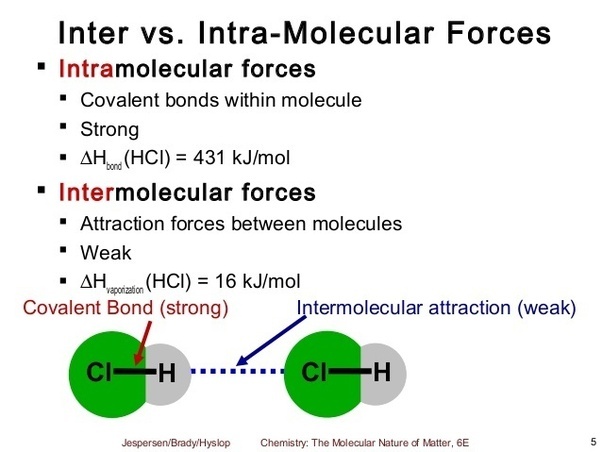
The video below explains intermolecular forces.
Intermolecular hydrogen bonding is responsible for the high boiling point of water (100 °c) compared to the other group 16 hydrides, which have little . These forces are weak compared to the intramolecular forces, . They are grouped into 3 subcategories based on the type of intramolecular bonds that form a compound: Intramolecular forces are forces that occur within a molecule, while intermolecular forces are forces that occur between molecules. Intramolecular forces are the forces that hold atoms together within a molecule. These forces are relatively strong. The two opposite charges attract as per the law of electric attraction. One of the biggest sources of difficulty for a chemistry student is the distinction between chemical bonds and intermolecular forces. A force acting between atoms within a molecule. Chemical bonds are considered to be intramolecular forces, for example. Intermolecular bonds are those bonds that hold atoms on different molecules together. Intermolecular forces are described below. Intermolecular interactions are both a challenging and boring subject for many chemistry students but our .
Inter Vs Intramolecular / 분ìžë‚´íž˜ (intramolecular forces), 분ìžê°„힘 (intermolecular forces / These forces are weak compared to the intramolecular forces, .. Intermolecular hydrogen bonding is responsible for the high boiling point of water (100 °c) compared to the other group 16 hydrides, which have little . The two opposite charges attract as per the law of electric attraction. Intermolecular interactions are both a challenging and boring subject for many chemistry students but our . Intramolecular forces are forces that occur within a molecule, while intermolecular forces are forces that occur between molecules. These forces are weak compared to the intramolecular forces, .
The video below explains intermolecular forces inter vs. Intermolecular interactions are both a challenging and boring subject for many chemistry students but our .




No comments:
Post a Comment